FilBo. Spanish Pavilion
Ministerio de Cultura de España. Dirección General del Libro, del Cómic y de la Lectura Acción Cultural Española (AC/E)
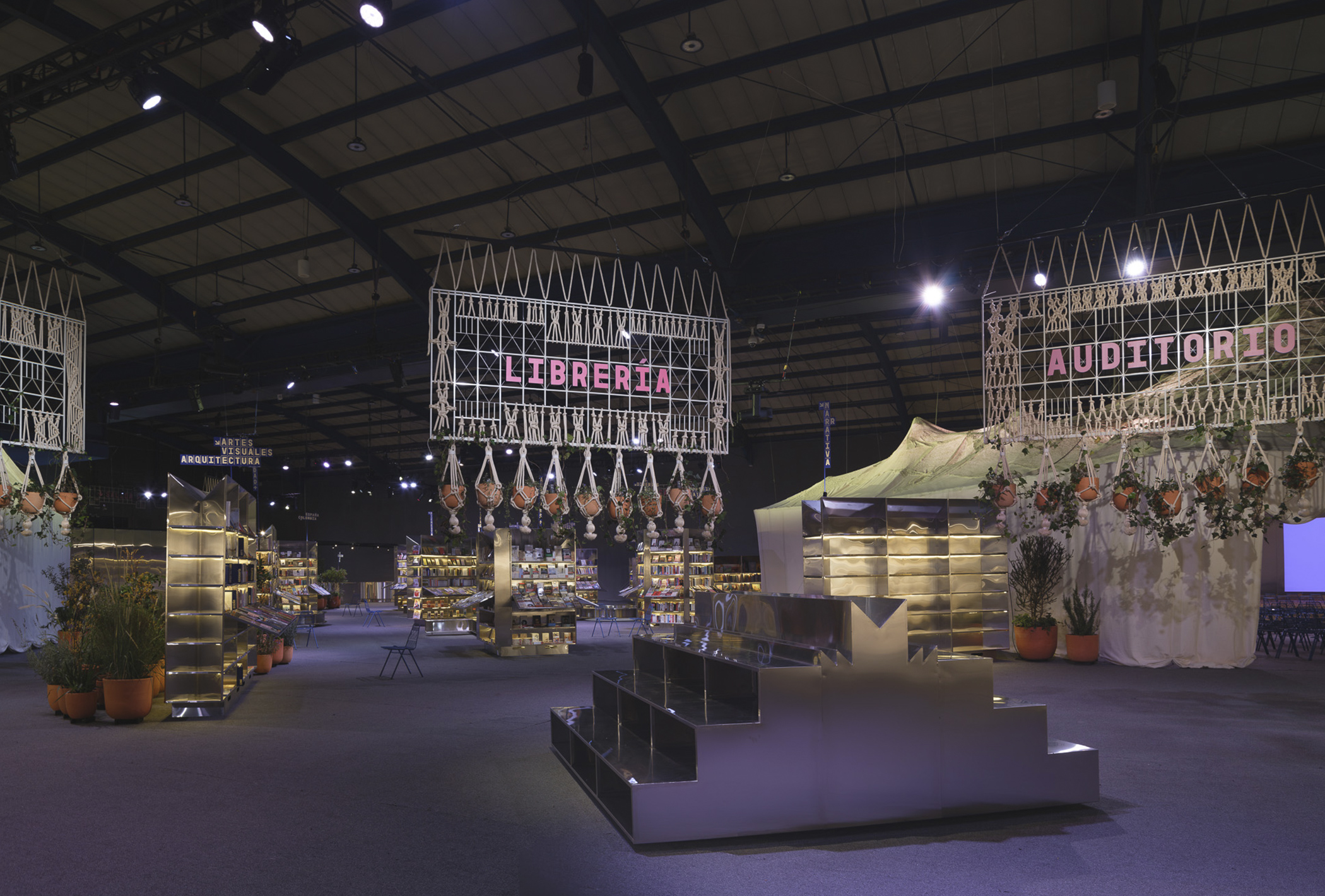
The Spanish Pavilion at FilBo 2025 is envisioned as a series of landscapes linked by the movement of itinerant libraries—essential infrastructure for universal access to knowledge. Historically, these libraries have provided reading opportunities to significant portions of the rural population in both Colombia and Spain. Within the pavilion, this concept connects two forms of knowledge: the written word (books) and artisanal knowledge (oral traditions), expressed through materials such as wool, macramé, nets, and fique.
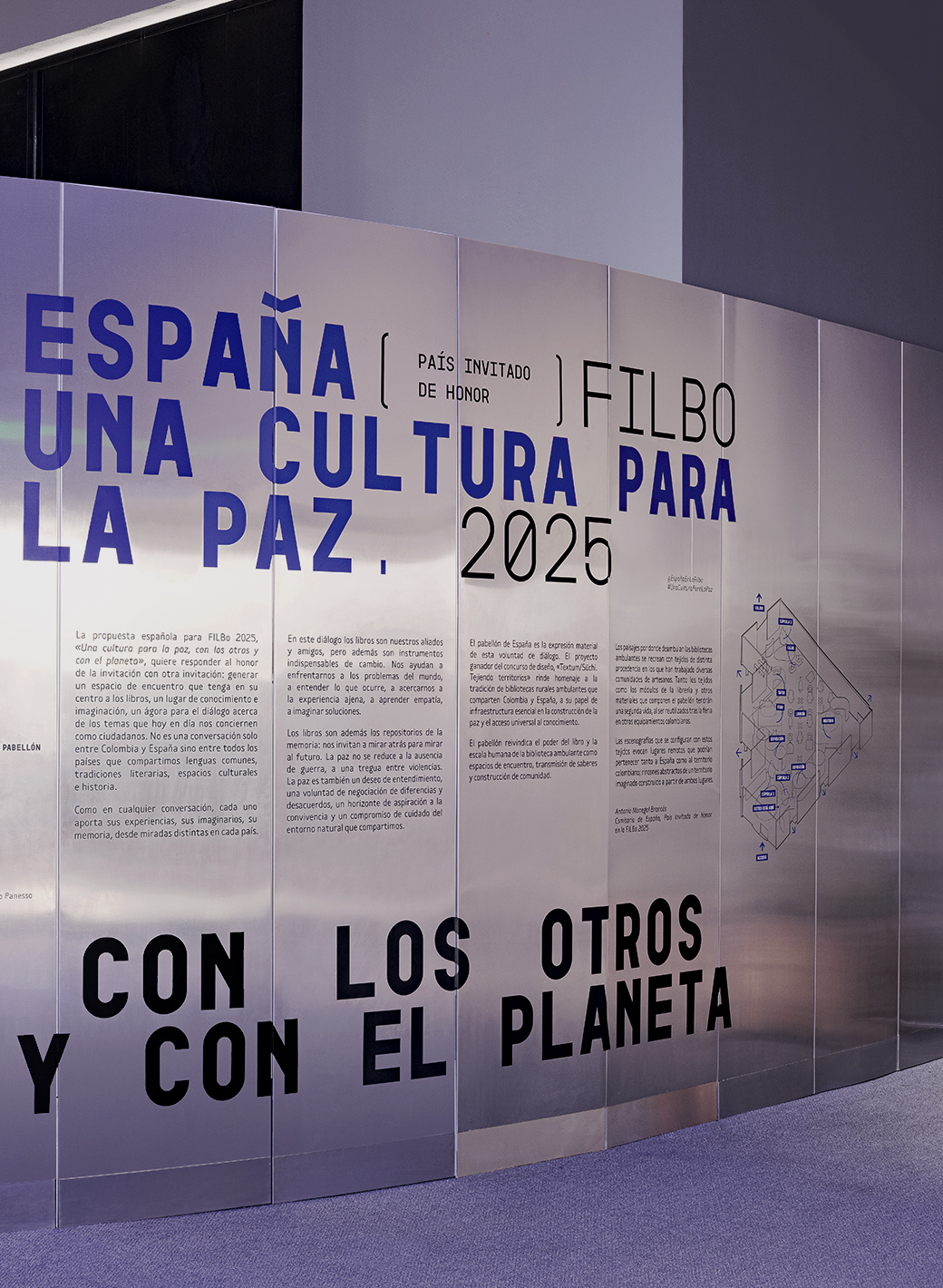
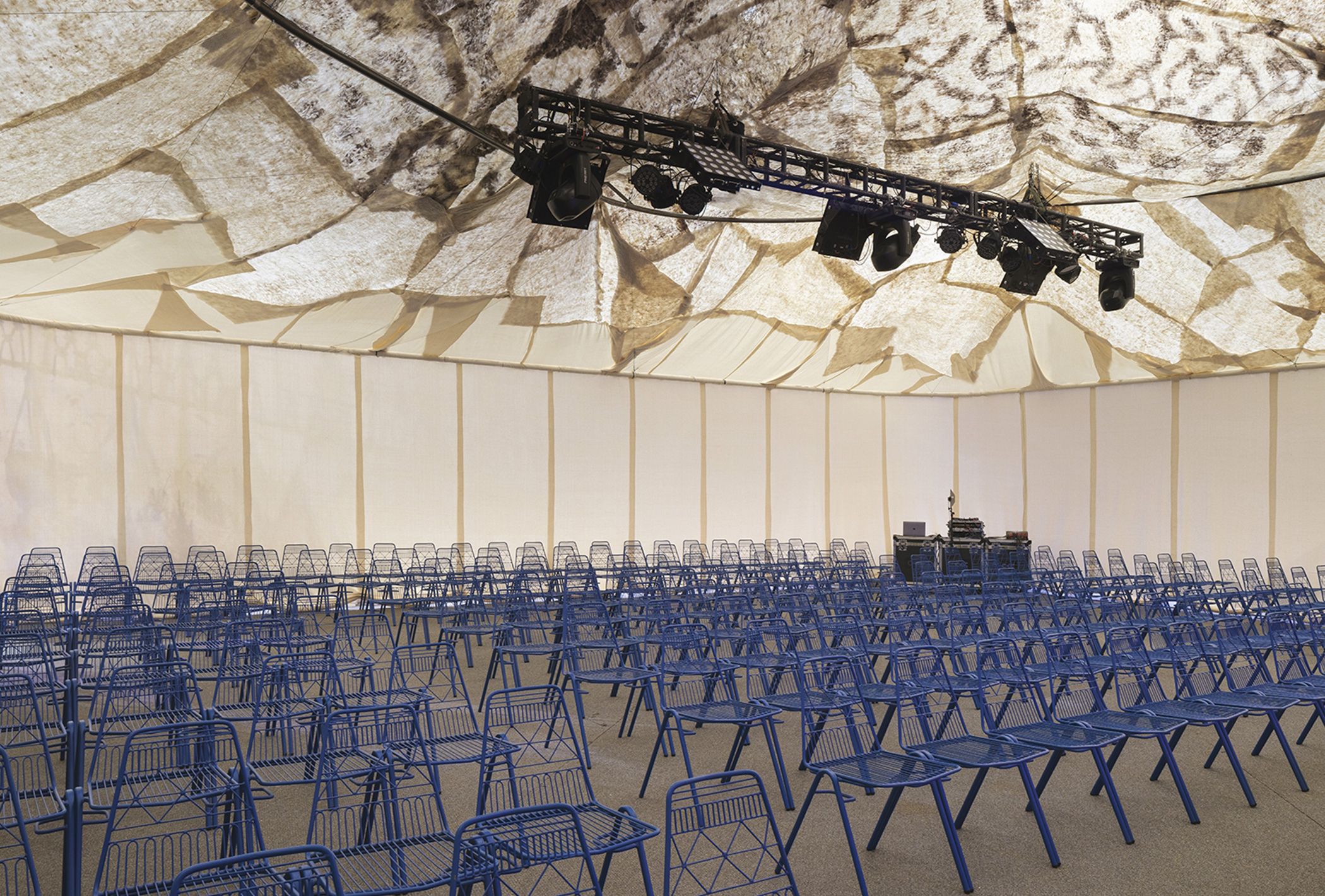
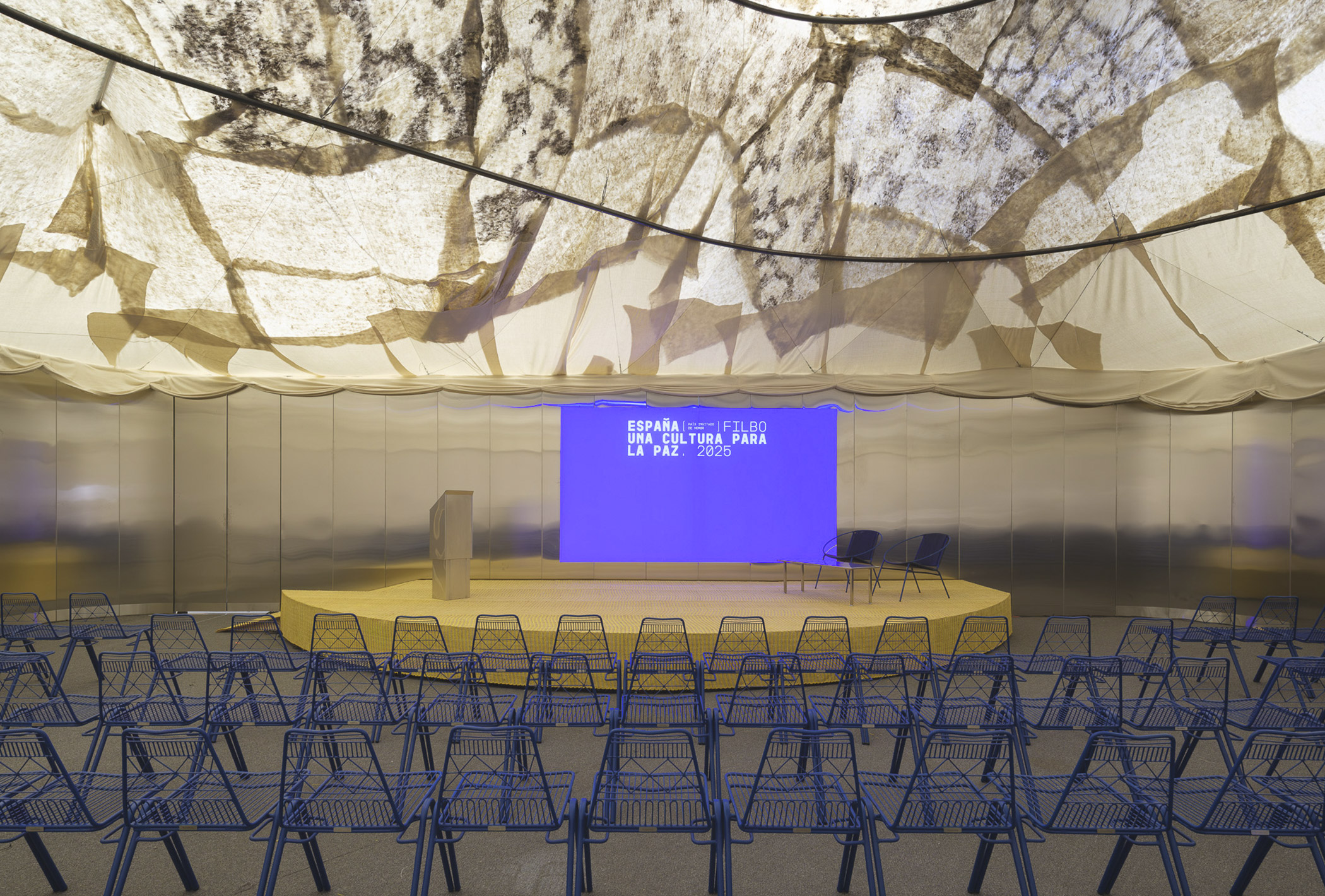
This duality resonates in the semantic interplay of words like text, weave, and narrative, which share roots in Latin (textum) and in Amerindian languages such as Wayúu (süchi). Visitors experience the pavilion as a carefully orchestrated sequence: welcome, encounter, and farewell. The journey unfolds across a large entrance plaza, a series of interior spaces—including two exhibitions, two auditoriums (for 240 and 80 people, respectively), and a major bookstore-library—and a second plaza with a canteen leading to the exit.
Artisanal Knowledge
The pavilion was conceived as a dialogue between Spanish and Colombian techniques and materials, intentionally countering extractive and colonial production dynamics. All production is local—primarily within Bogotá’s region—reactivating community-based artisanal economies.
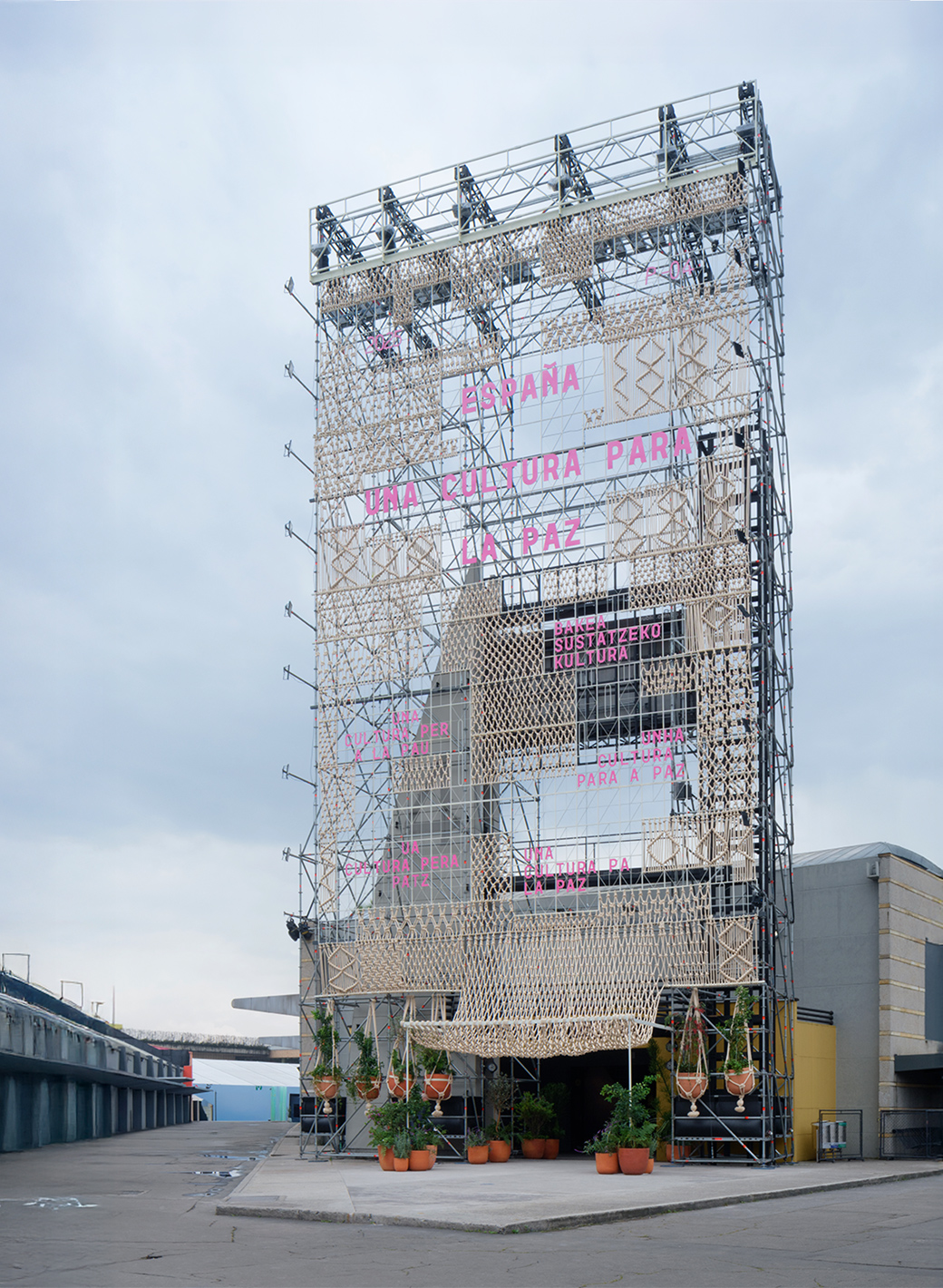
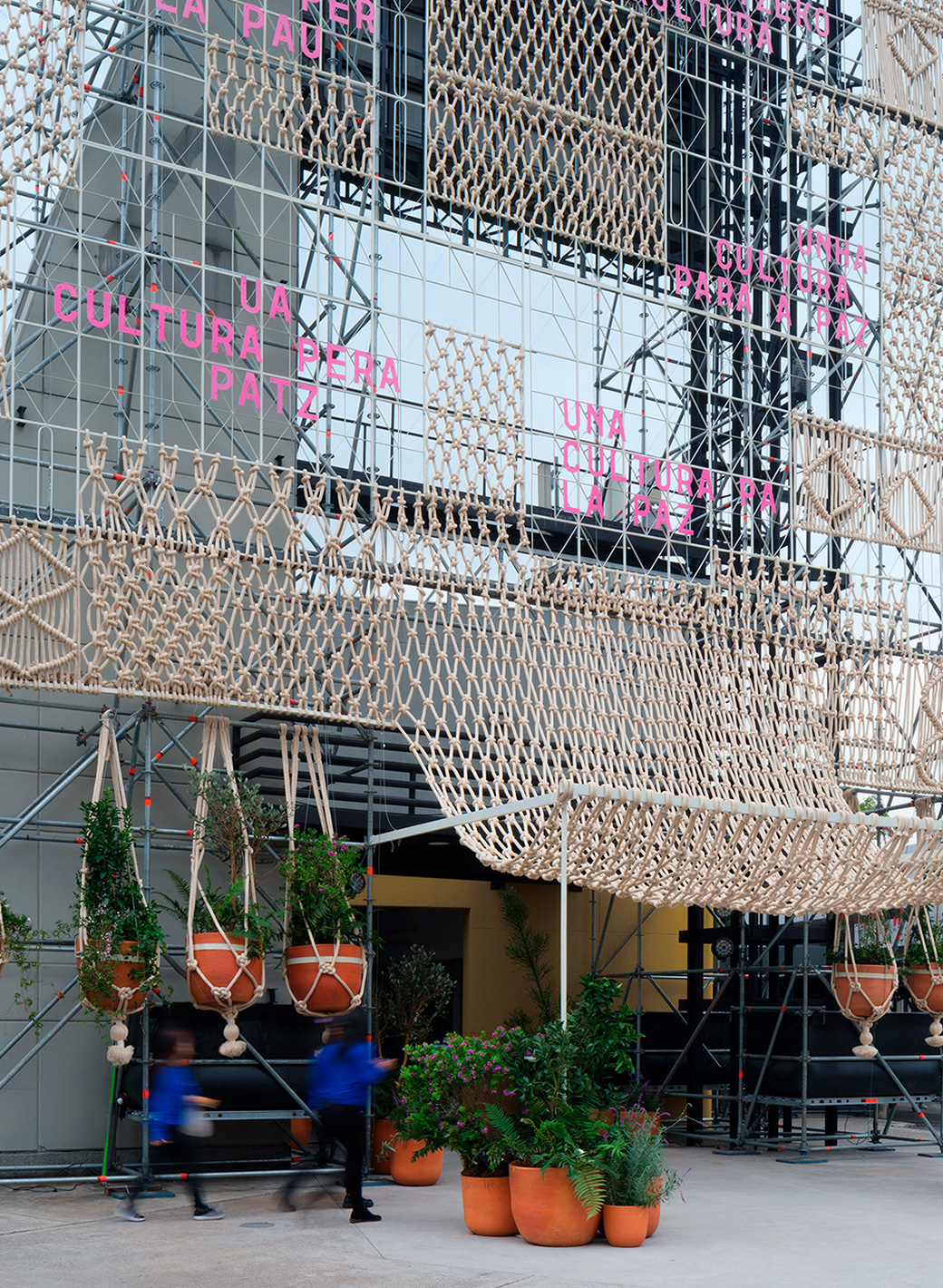
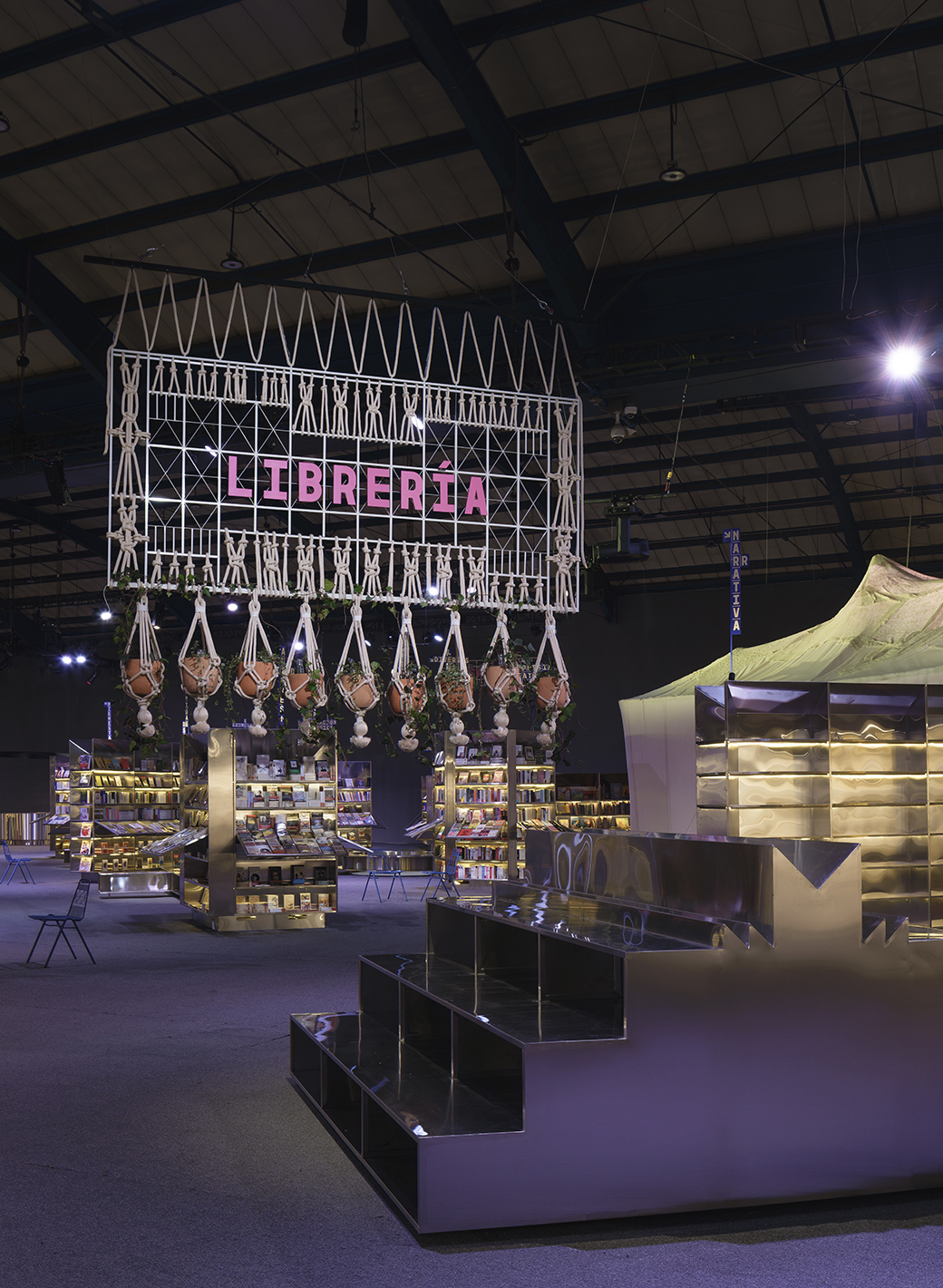
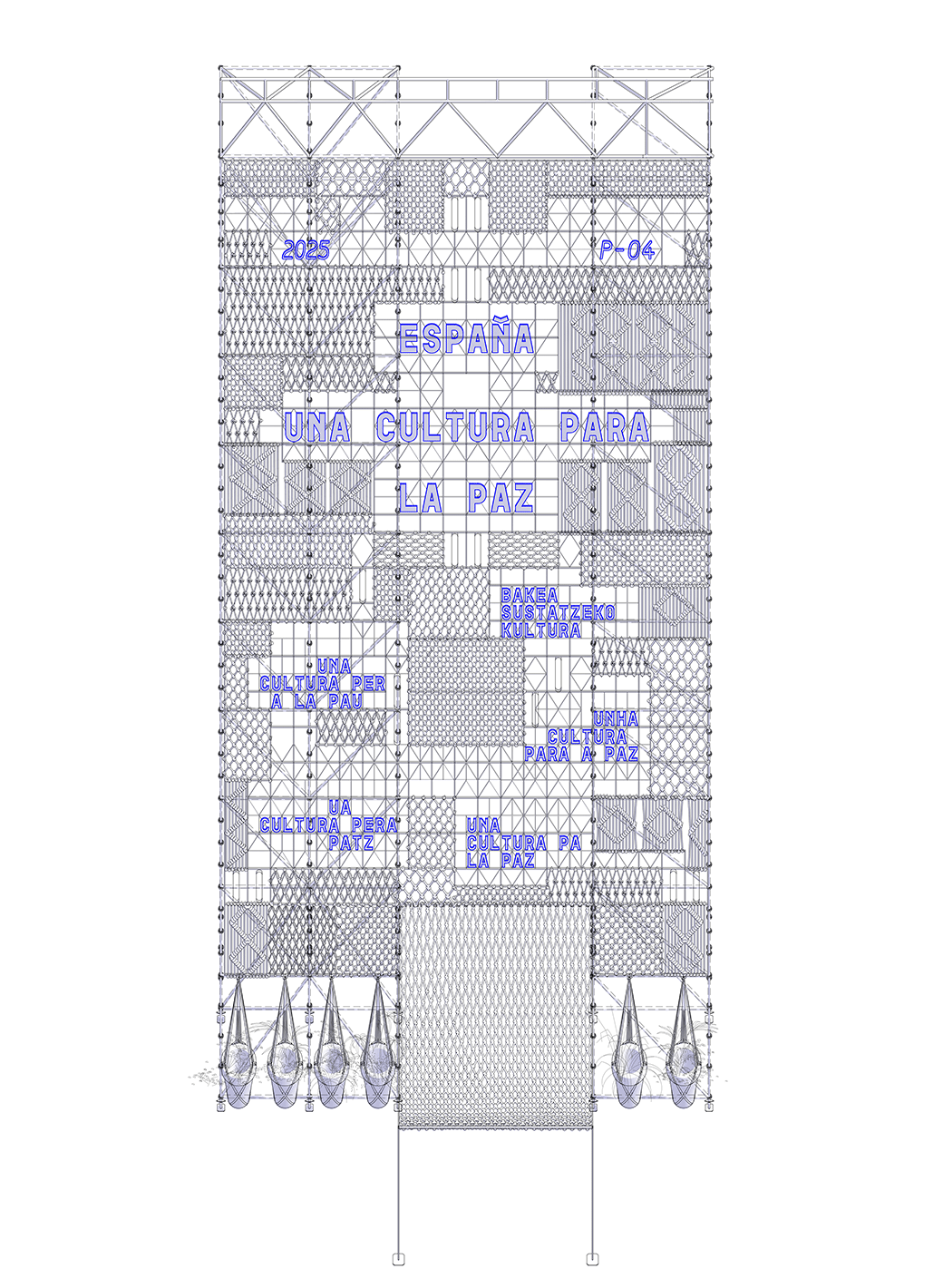
The façade is defined by a monumental 200 m² macramé tapestry created by artisans from Cogua.
Interlaced with climbing plants, the tapestry evokes Iberian cliffs and Amazonian tepuis, foreshadowing the interior landscapes and textile wayfinding. Originating in the Arab world, macramé arrived in the Americas in the 16th century, evolving from pre-Columbian traditions into distinct local forms. Beyond its ornamental function, the piece challenges the historically marginal status of textiles and their association with women’s labor.
The auditoriums are conceived as mountainous formations, constructed from suspended sheep wool panels that provide acoustic and visual isolation. These pieces, crafted by a community of Sutatausa artisans, reference the transformation of textile techniques following the introduction of sheep farming in 16th-century Colombia, when Muisca communities began replacing cotton with wool in the production of ruanas. Additional woven materials include fique flooring by Curití artisans and fishing nets from Lorica, alluding to Hispano-Colombian cultural identities.
Written Knowledge
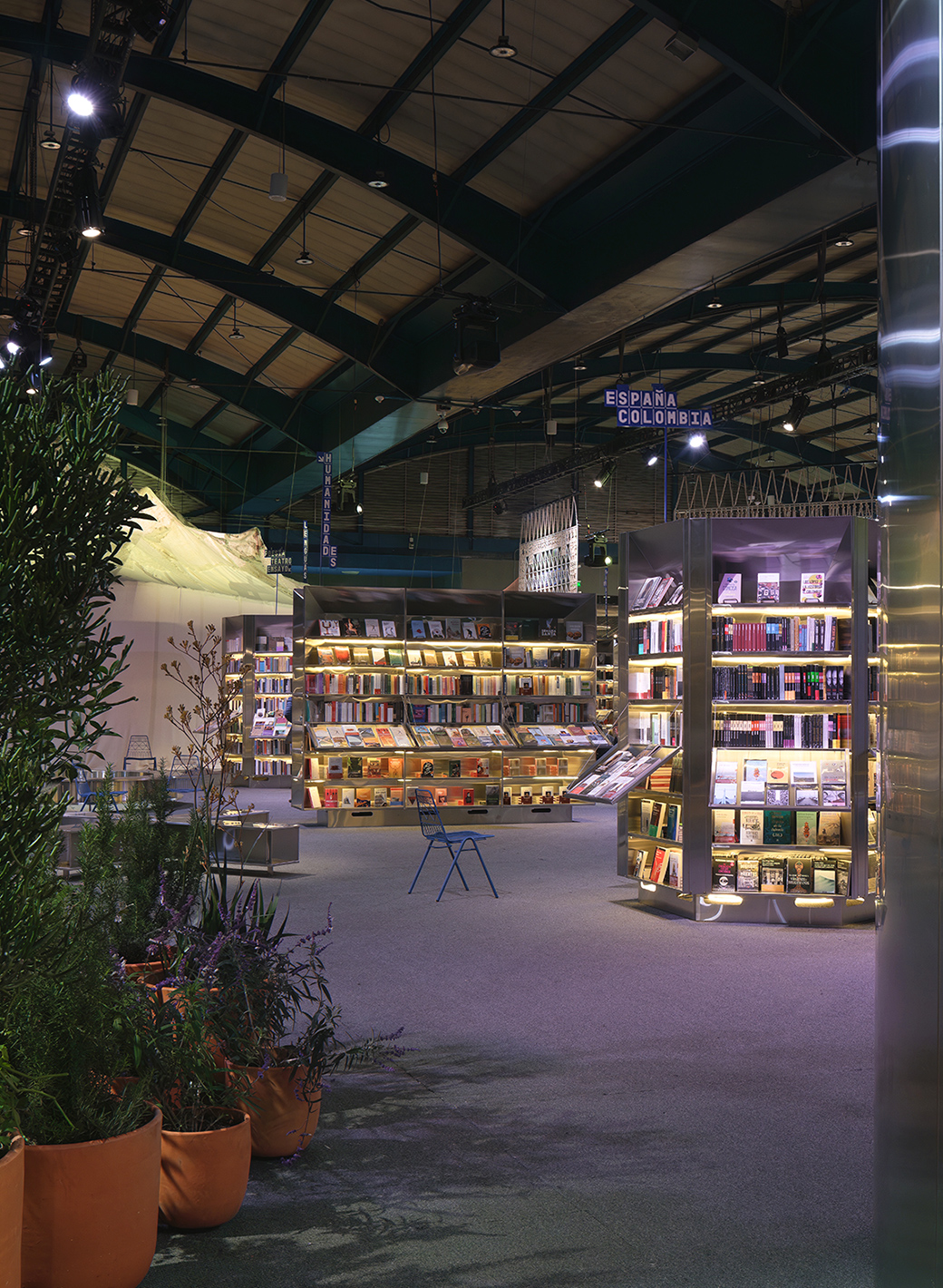
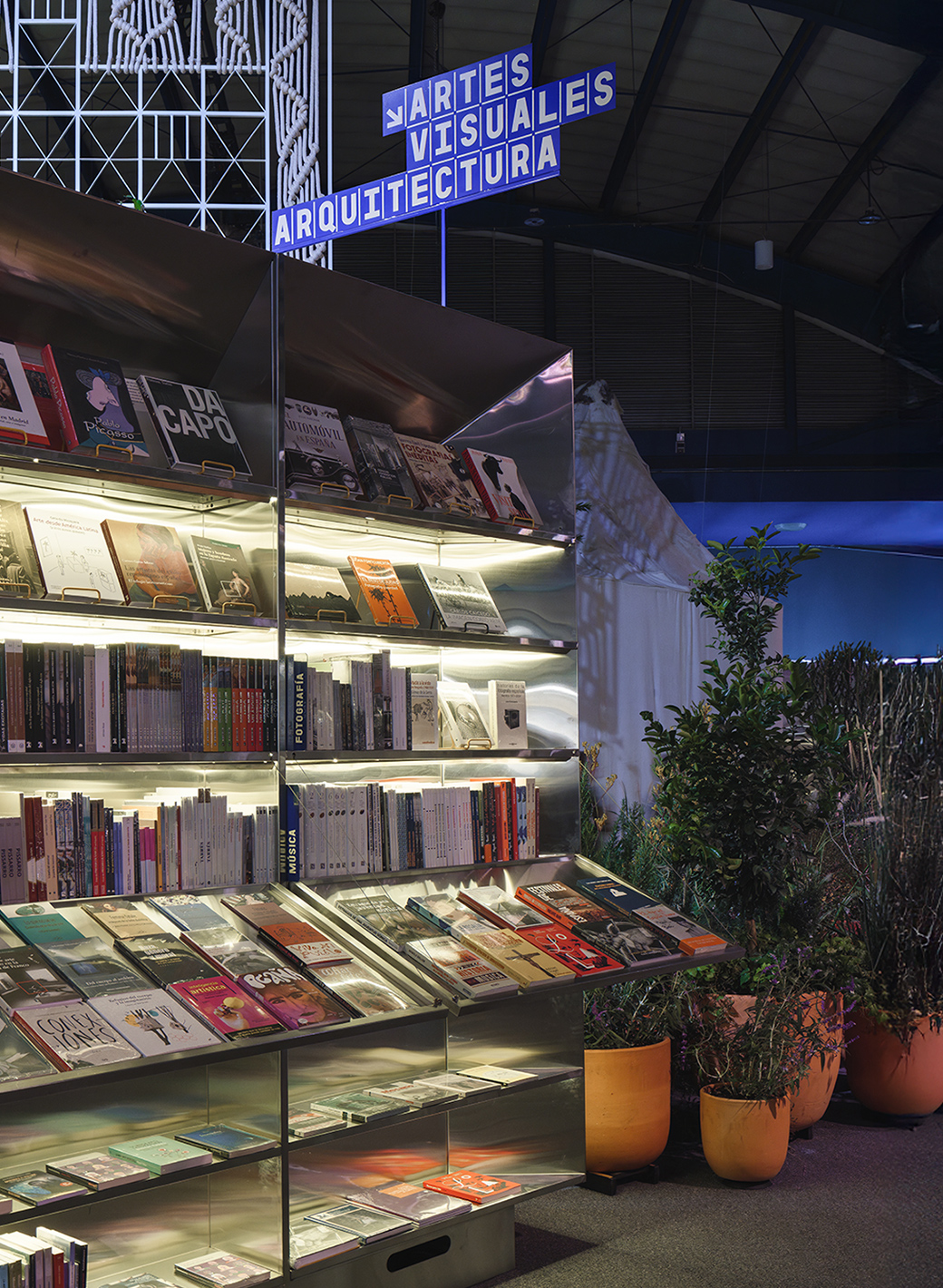
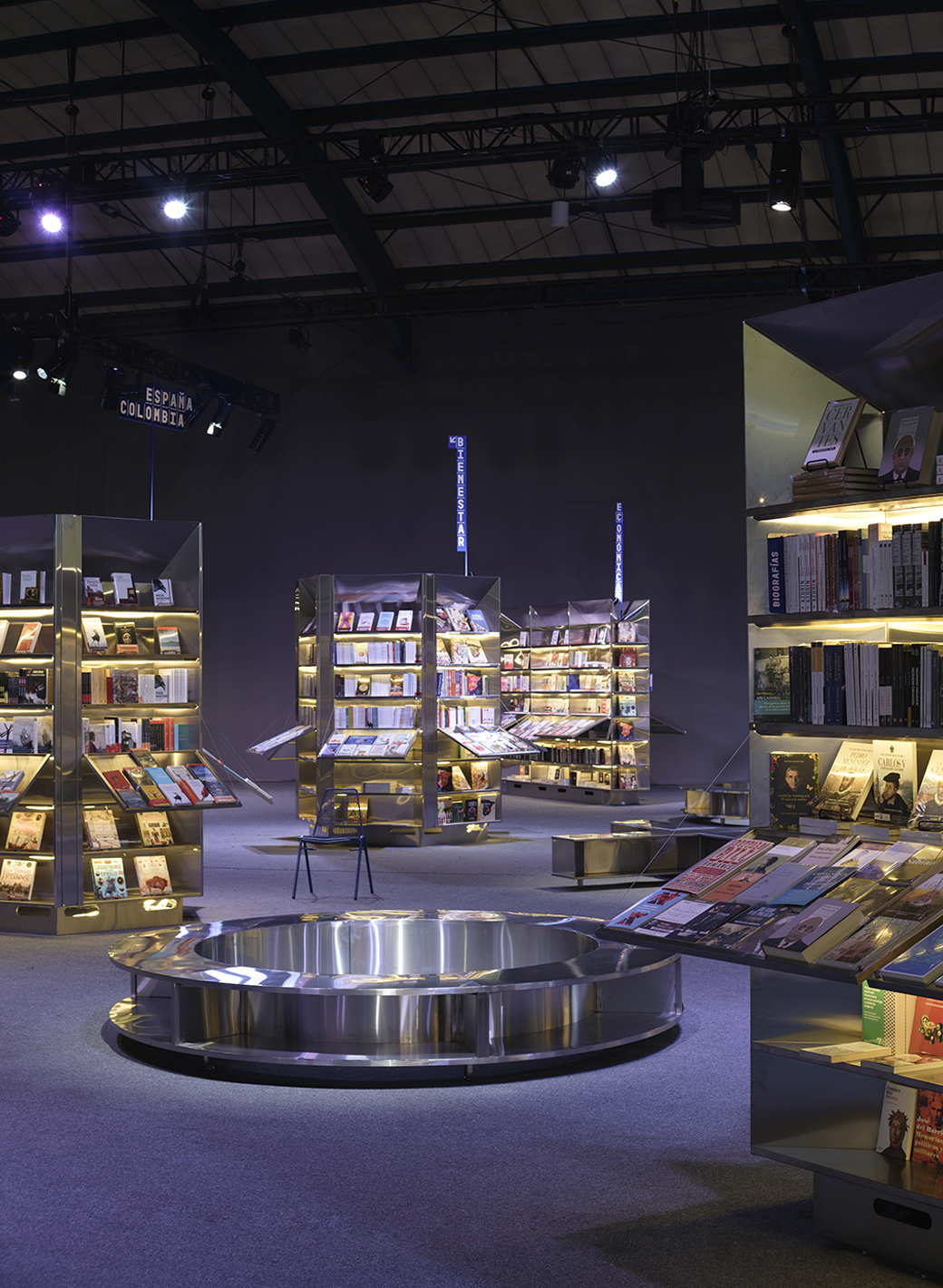
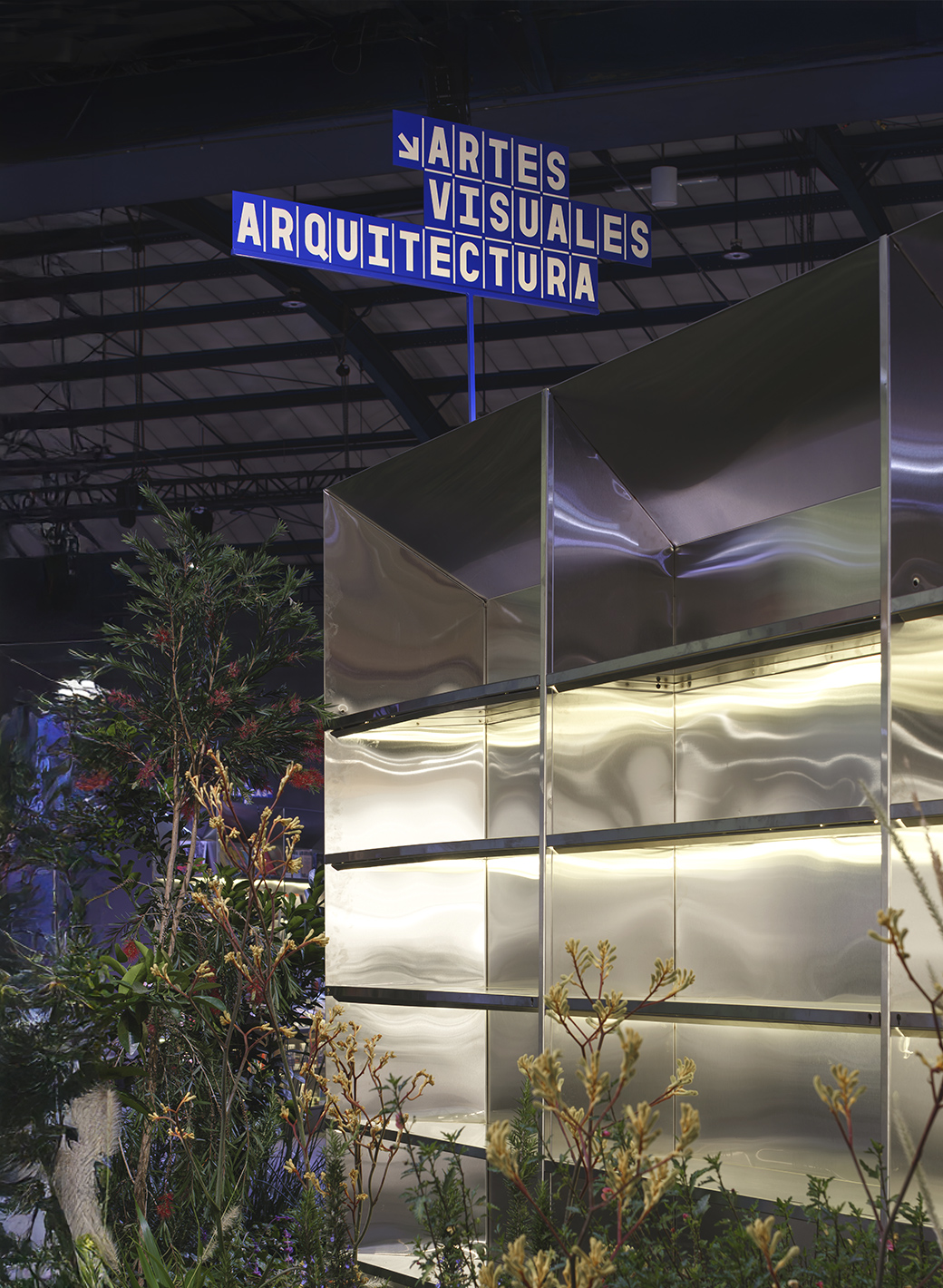
The void created by the surrounding textile and wool installations is occupied by the bookstore, a central meeting point. Its 12 stainless-steel modules are inspired by four historic itinerant rural libraries from Spain, connecting the pavilion’s design to the long tradition of mobile knowledge dissemination.
Second Lives
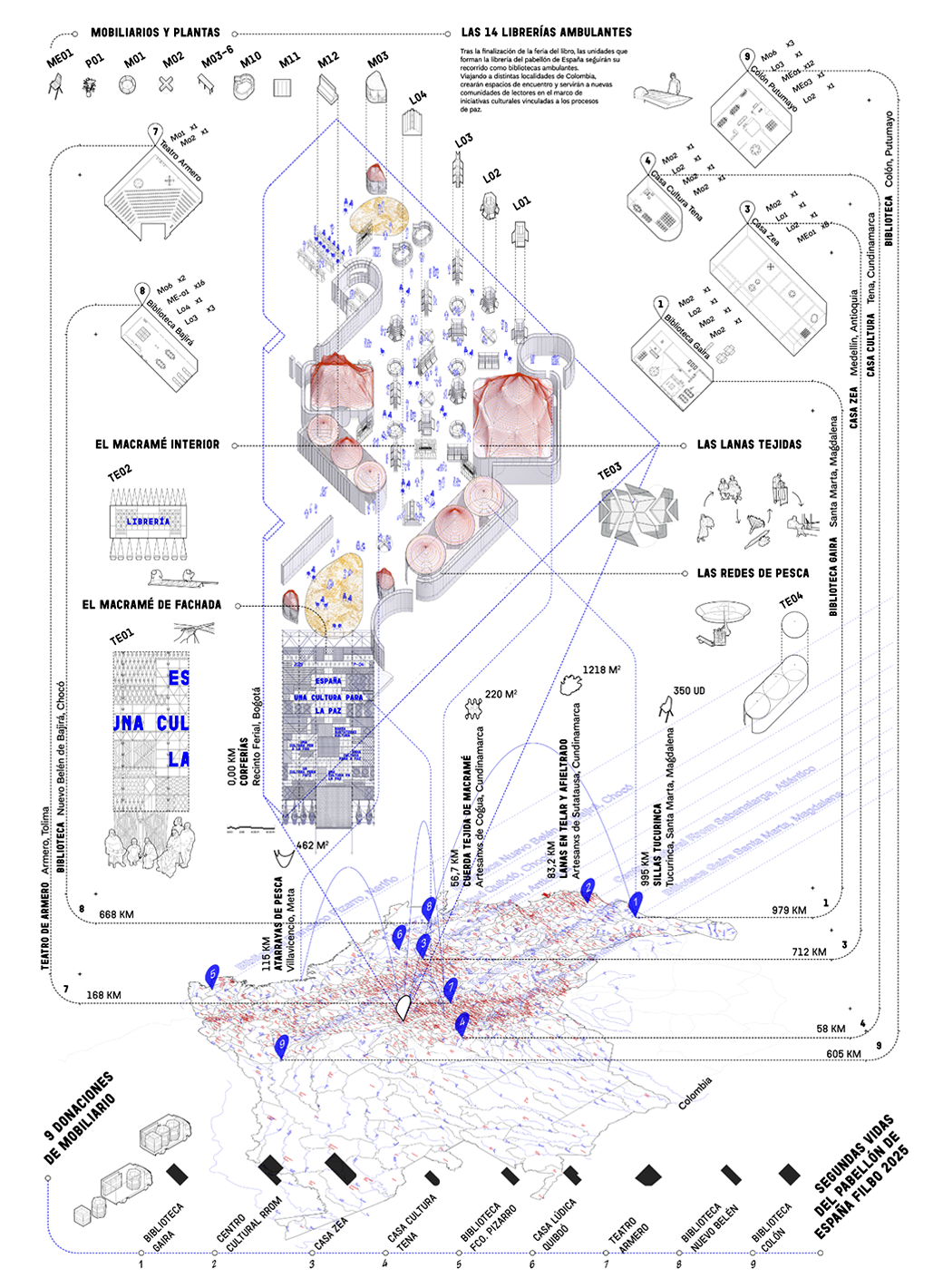
All elements of the pavilion are designed for reuse in cultural initiatives linked to Colombia’s peace processes. Bookstores, furniture, textiles, and partitions have been made to be transported and adapted to challenging environments.
These components have traveled to various localities across the country, extending their life as itinerant institutions serving rural reading communities. They are now strengthening public libraries and cultural centers in places such as Gaira (Magdalena), Colón (Putumayo), and La Modelo prison in Bogotá.
The pavilion is thus a zero-waste project: sustainability is embedded from local production processes—mobilizing social economies—to material circularity. These strategies are essential in contemporary temporary architecture and have been central to the authors’ practice for over two decades.
Authors: Lluís Alexandre Casanovas Blanco. Paula Chalkho Rozenblum. Enrique Espinosa Pérez. Santiago Pradilla
Design Team: Irene Domínguez, Sofía Marcie, Jaime de la Torre
Client: Ministerio de Cultura de España. Dirección General del Libro, del Cómic y de la Lectura.
Acción Cultural Española (AC/E)
Curator, Spanish Pavilion: Antonio Monegal. Technical Advisor: Yetta Aguado Arnold
Production and Operation of the Pavilion: DIEZ Colombia + Alexander Gümbel, Manuel Villa, Vecinas Chicoteras
Artisans: Manuela Álvarez + Asociación de Artesanos de Cogua (macrame). Constanza Téllez + Artesanos de Sutatausa (wool). Cooperativa Ecofibras (fique). Emilio Doria and Amaury Rodríguez (cast nets). Edilson Rodríguez and Rusbel Rodríguez (wrought iron)
Photos: Javier Agustín Rojas